Monday, April 5, 2010

A Time for Reflections

Today's to-do list:

  1. Practice being fully retired
  2. Play with my compact Canon S90 digital camera
  3. Bring home Venti Coffee and Venti Mocha from Starbucks
  4. Dig 9 daylilies at the Green Center and plant them at home
  5. Do this in the mud if necessary, but avoid the cloudbursts and lightning bolts
  6. Call 5 mulch guys from Perryville and buy 8 yards from the first one to call back
  7. Read Dennis Johnson's Alread Dead while awaiting the mulch, after making tuna sandwiches
  8. Pay my auction bills and update my daylily database
  9. Feel additional degrees of separation from my 33-year humanities career
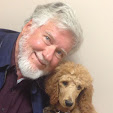
I have been heavily into reflection since I turned the corner in December, but with a camera in hand, reflection becomes a theme.  Take, for instance, our dear companion, Lola The Poodle.


Lola is getting a lot more rides, now that I'm home more than not.  With a poodle's intelligence, rides are essential to a sense of well-being.  She especially loves a ride to Starbucks.


She nudged me when she read "Admit it.  You want one."  I couldn't translate what she said to me about that, but I don't think she wanted to admit anything at that point.  She had her eye on the car ahead of me, and on the mirror.


Reflection, reflection...oh, there is no boundary to it.  Italo Calvino could have started a novel with a picture like this, but I can only start a sub-reflection:

She had a far-away look made formidable by the oversize dark glasses.  The narrow mouth closed without energy.  A thought formed...what was it?  "Did I turn off the stove?"  No, nothing that mundane, not in a story by Calvino.  Not, too, a thought about what to order this morning.  This is a thought about something that might have been, if not for...


Or was that my own thought, imagined in the car ahead, or was it not a thought at all but just a brief reflection on the way good and evil contest in the world and on the ways that evil often seems ascendant, even triumphant?

Even the lens of the dark glasses contains a reflection.  The car's surface is another mirror, a symbol of arrest without warrant, to play with words.  It's all about Stop and go at Starbucks, nothing about the play of good and evil, just spreading cheer with a bit o' banter.

Lola waits to make her remarks.  At the window, she barks, "That's hot!  Watch out!  Don't spill that!" and the girl smiles.  They know Lola and all her warnings.

In my jesting about retirement careers I have posited a life as a pirate on Missouri waterways, or as a counselor for out-of-work government torturers who have an immense weight of reflection on them as they push their grandchildren's strollers down the sidewalk, always attentive to the possibility that an assassin from "the enemy" is in the neighborhood, waiting.  I wonder this, I truly do: do parents and grandparents who torture people feel the disquieting and self-killing feeling that the person they torment is someone's child or beloved?  Does the torturer's capacity for empathy boomerang back and inflict a terrible wound to the soul?

There is a balm in Gilead
To make the wounded whole,
There is a balm in Gilead
To heal the sin-sick soul.

The suicide bomber and the torturer are expressions of the One Evil.  They walk the same side of a dirty street no one travels but the broken, those lost to the world and estranged from the One Good.

Oh, lost people!  Are you tugged and dismembered spiritually when you hear a line like this, from Neil Young's "After the Gold Rush?"

I was thinking about what a friend had said,
I was hoping it was a lie.


She turns the corner; her face is gone.

Monday, March 29, 2010

Spring Emergency

"Here bygynneth the Book of the Tales of Caunterbury.

"Whan that Aprill with his shoures soote
The droughte of March hath perced to the roote,
And bathed every veyne in swich licour
Of which vertu engendered is the flour;
..."

In An ABC of Reading, Ezra Pound instructed us all in the fine art of syllabic music that Geoffrey Chaucer had absorbed from the French poets of his era.  Chaucer brought into the English language the perfect elision of sound wedded to a perfect choice of words to define true lyrical poetry in our language.

I usually recite this passage aloud at this time of year, in my garden, as I rake the leaves off the emerging green shoots of my beloved daylilies.  There is a guilt I have felt in late March each year during my employed life.  It is the guilt of being pulled away from my desk work by the "other master" I serve, the master that is the mystery of my garden.  I am a steward of an environment of 'thworms, as every good gardener must be.  I care for the health of soil.  This husbandry of soil, creatures, and plant life is a calling.  It is in my deepest memories of tending a huge vegetable garden with my retired grandfather in New Jersey.

The emergence of malevolent weeds among my plants is like a state of emergency to me.  I prioritize what I must do with the limited time after my work day.  I look for ways to quit early, take work home for later.

And so, by stealth, and to avoid the embarrassment of a big retirement party, I announced my retirement Saturday, seven weeks ahead of schedule, after my succession was assured, and changed my status to volunteer.  For me this is the perfect solution.  I can face the diminishing workload without any guilt now.  I need show up at the office only when one of my few final projects needs attention, and then when I have them safely in harbor or approaching there, I can fade from the scene entirely to make space for my successor, who will be formally introduced in the next edition of the MHC Passages newsletter.  I can still enjoy the fellowship of my colleagues and assist Patricia Zahn, the finest colleage I have ever had, who is now the Interim Director, until my chosen successor moves to St. Louis next month.

Most of my attention right now is on my daylilies, which are just now declaring their survival or injury from the severe stress of this particular winter.  Many new plants I gambled on in the Lily Auction last summer were not hardy enough to take what St. Louis reality dished up this time.  The living center of their crowns is gone.  If there is any life at all in those tissues, it will emerge from the side and bottom of the crown several weeks from now.  But I won't let them have that chance.  I only consort with the fit.  The unfit are relegated to the yard waste bag to make room for another gamble.

If you hybridize, you are a gambler.  The only question is how much of an ante you dare to put up each year.  You can see how serious I am about this by checking my garden web site at daylilylay.com. Here is a special new one that I bred in 2001 and flagged for keeping in 2003:


I'm going to name this one LIZ PAINE, for one of my longtime professional friends at the Federation of State Humanities Councils in Washington, D.C.

Today, Palm Sunday, it's a bit rainy, but not much more than a drizzle.  I must go dig several plants of my GOODNIGHT KISSES and DAVID AND ALAN to send to buyers who begged me for plants as early as possible.  Both of these are frostproof and hardy, as I hope I will be for a lot more years.  I like telling garden club audiences that "you'll love my Goodnight Kisses."  It's important to have something to laugh about when you're sitting on a chair you would never actually want to own and use.  Do you know that type of chair?  It's standard issue in community centers.  They are designed to encourage brief meetings.

I am designed for life, and I'm going out now to affirm that in my garden.

Thursday, February 4, 2010

Reading in a Chinese Garden


Last month Kathy and I visited the Chinese Garden in Portland, Oregon.  It's the type of garden that one of the high officials of the Ming Dynasty might have built for himself in some remote city to remind him of the splendor of Peking.  We arrived just in time to join the one o'clock guided tour for a small group of people numbering no more than ten.

Our guide began with an imaginary orientation of where this garden might have been sited in a crowded Chinese city.  She pointed out the high walls, for privacy, and let us know that the decorative openings in the walls were not authentic.  They were necessary because of the Portland building codes.

She began to talk about ancient China, and the stages of examinations that a scholar had to pass in order to become a high court official.  Immediately she reached into a blue tote bag and withdrew a map of China.  This would be a reference point as she spoke of the geography, the distances, and the differences in population.


As we moved from one stopping point to another, the guide discussed the variety of plant forms in the garden and the symbolic importance of fish in the water.  "You may wonder why you might see a whole fish on a platter at a Chinese festivity," she said.  "Why don't they remove the head and tail before serving it?"  We all waited a few seconds before she said, "It's because the fish represents abundance, or the wish for abundance, and the head and tail symbolize the entirety of life."

We entered a variety of rooms around the garden and heard about what they symbolized to the owner and to his visitors.  One room had a small library and a writing desk with inks and brushes, the trappings of beautiful thoughts, beautiful writing, and beautiful images.

At last we came to a set of carved wooden panels.  Our guide pointed out the theme of the carvings and the presence of poems there.


And then, to end the tour, we all had a special treat.  She reached into her tote bag and withdrew a book of Chinese poems and their English translations and she asked for two volunteers to read to the group.  I thought immediately of so many museums back in Missouri, places where I had seen a Civil War loyalty oath, a telegram from General Alexander Doniphan to the Governor of Missouri in 1838 in which he refuses to carry out an order to execute Joseph Smith and a party of Mormons.  I thought of the journals and stories of Laura Ingalls Wilder, the stories of Mark Twain, the letters of Harry Truman, Eugene Field.  I thought of the recollections of former slaves, the diaries of German immigrants, the letters of soldiers to their parents in time of war.

There are so many opportunities to use a map or to engage visitors in reading the primary sources of history.  I saw the magic of props like that in Portland.

Tuesday, January 5, 2010

"Design Intelligence" and Its Enemy

A couple of years ago I visited the Sikeston Depot Cultural Center and admired the tastefulness of the exhibits in the small space that was available. I think it is true that most of us sense the features of any space we enter. Some of us sense in more detail than others, and some of us can verbalize what we sense more readily.

Probably the first thing we sense is cleanliness and the qualities of color and light, unless an ordor grabs our attention! (I won't go near scented candle shops. A museum friend is especially sensitive to mold that I can't detect. On the other hand, I like the aroma of fresh-baked bread or a good beef stew.)

In the picture above we see "design intelligence" at work in a small area that tells the story of cotton production. The lighting is beautiful. Three-dimensional objects shape the space we enter and draw us toward the two-dimensional pictures and text panels. The objects defeat what would otherwise be a "tyranny" of right angles. If the room is a box, and the pictures and text panels are flattened boxes, you have to introduce curves as well as "empty space" like the space in the branches of the cotton plant and between the legs of the table. Think of curves and empty space as the "freedom fighters" in your displays.

I see design intelligence almost everywhere I go. You don't need formal training to do a good job in a local museum. You just need a sense of cleanliness, light, space, variety, and narrative.

Here's an exceptional example by a volunteer at the Katy Depot in Sedalia.

Everything in that small case is placed to perfection. Everything contributes interest.

The Enemy of design intelligence is not a person but a feeling that impels you to add something to an excellent display because you happened to acquire it after the display was perfect. A voice inside you says something like "What's wrong with displaying another treasure?" It may also say, "If someone donates something, I have an obligation to display it immediately!" As you listen to that voice, see if you can hear the camel's backbone break. It only takes one additional thing to destroy the perfection of a sentence, a meal, or a display.

I write this in a mild sense of mourning for the museums that once had fine examples of design intelligence and ruined what they had by filling up the space with more and more "stuff." There are times, when writing a sentence or a paragraph, that the new word that comes to mind is a destroyer of what's already there. It's best to dismantle the whole thing and start over.

That's true of museum displays, too. Nothing good happens when you keep adding and adding. You don't make "bad" any better, and you quickly degrade "good." The mission is not to display things, anyway, no matter what the mission statement says. The mission is to stimulate (not numb) the intelligence of a visitor. The unique power of design intelligence is that it invites discovery and learning. The enemy of design intelligence creates only a desire to flee.

This cold season is an opportunity to look around the museum and find an area where you can take everything out and start over again. Go ahead. You have eight weeks, maybe ten. Give yourself an empty space, clean it up first, and then create a learning opportunity in that space. Create something different that suggests an idea. Juxtapose items that have never had a chance to inhabit the same space and see what happens. Play around with combinations for four or five of your eight weeks and then polish up what works best in the final three. And then invite me over!

Tuesday, December 22, 2009

Round Barn, Morrisville, Vermont (1980)


From 1975 until 1995 I drove the back roads of Vermont, very often with my camera. I adored my adopted landscape, of course. In the fall of 1977, San and I moved to a big new house on the edge of the village of Hyde Park, about 30 miles south of Canada and an easy 2-hour drive from Montreal. We were ten miles north of the year-round resort town of Stowe, an hour's drive northeast of Burlington and the view of Lake Champlain, and about 45 minutes in good weather from Montpelier, the state capital and home of quite a nice book store and a natural foods market that sold the home-made bread of a local humanist baker, Jules Rabin. Just east of Hyde Park lay the town of Morrisville, and just outside of town, on the road to Lake Elmore and then onward to the back entrance to Montpelier, sat this round yellow barn.


Just beyond the barn was a small country home of a woodworker whose business was named The Wood Nebbish. The word nebbish, I have just discerned, means a "pitifully ineffectual, luckless, and timid person." Until the age of 13, I hadn't heard any Yiddish expressions, having been raised Lutheran and schooled with Lutherans.

I am not moving toward endorsements of any particular religious theme here. This passage is about how the notion of religion was formed in me as a cultural idea rather than a theological one. My father, the architect, recounted a fateful letter home from boarding school at the age of 15, when he informed his father, minister of the Lutheran church in the small German-speaking town of Hamburg, Minnesota, that he was not going to become a church minister, musician, or teacher like his 9 siblings. This declaration was not a separation from his church. Church-going was at the core of his way of life. It was the same way with Mom, who had been raised in the Catholic church and had become a Lutheran before she met Dad.

Dad and Mom were different kinds of Lutherans, but neither was given to discussion of religion. For them, a code of beliefs was a fixed point in life, an anchor. It was in a Lutheran Sunday School that I had a transformative experience that gave status to questioning and opened the door to interpretation. So I became a third kind of Lutheran, more in league with my cousin, Walt Bouman, one of several theologians in the family. I became the kind of Lutheran who could inquire into other religions, stop attending church, and one day welcome a marriage ceremony conducted by a Buddhist priest who lived in a monastery in Jemez, New Mexico. I, too, am anchored by a system of beliefs. I, too, have something one might call a theology, or a cosmology. What I might call it doesn't matter to me. That I have it at all is what links me to my parents' cosmology and to yours, Reader.

A propos of the Christmas season, I discovered the fervor of Dad's convictions when I was in 7th grade and said I wanted the Elvis Christmas Album for Christmas. I might just as well have proposed that he give me an encyclopedia of satanic practices. He exploded in rage. There is no better way to say it. He didn't break up the house or batter me. Remaining in his easy chair, he simply "went balistic" as we would learn to say a decade later. He didn't use the term "blasphemy," though it applies to his reaction.

I did acquire that LP record, though not through any act of his! He did not seize it, ruin it, confiscate the record player, or prevent my memorizing its satanic verses. To this day I do a fair imitation of Elvis's "Blue Christmas," if you're not paying much attention and have other things on your mind.

This began with "nebbish" and the exoticism of Yiddish expressions. In junior high school they buzzed around me left and right. My 9th grade girlfriend, Arlene, liked the word "meshugganah" (crazy). I never asked her to translate it and I never used it myself. I sensed these terms were "cultural property." The absurdity of violating those cultural boundaries is one of the jokes in the movie, "A Mighty Wind." Another word I heard a lot and never understood until just now was, "schlemiel," meaning a habitual bungler.

Last Saturday Kathy and I watched the Metropolitan Opera HD broadcast of Les Contes d'Hoffmann. It was a fabulously theatrical experience, true Grand opera, and one peripheral character in the third tale is named Schlemil. Nothing about his deportment suggested he was a bungler, though.

Well, enough reminiscing about how we form ideas about ourselves and others.

My photo of the round barn is the first of a series of desktop wallpaper images I'm going to post to my Flickr site for any and all to enjoy. I'm using the round barn this week as my desktop image.

Once I started growing daylilies, farm fields like that always caught my eye as potential daylily farms run by me. I imagined acres and acres of vibrant color and I went on like that for several years before it dawned on me that someone was going to have to do a tremendous amount of digging, washing, dividing, and weeding. I didn't have to ponder the scale of that labor very long before I scaled back my dream to a scope that I could possibly manage if everything went well for me and I developed the strength of Hercules.

My heart goes out to those who have lost their mothers recently. My mom died peacefully, slipped away during a surge of misplaced optimism about her imminent release from the hospital after her final COPD episode. Mom only had to endure 9 months in the nursing home. It may have seemed like an eternity to her. Until the big hurricane in 2004, Mom had been able to live independently, in a manner of speaking, with very limited eyesight and intensive visitation by my sister and brother-in-law. The stress of the hurricane or simple progression of her disease made it untenable for her to live without continuous monitoring. On Sunday evenings before her transfer to the nursing home she and I had weekly chats. I remember the sound of her voice on the other end of the line as if we just spoke last night. She had an earthy sense of humor, having been raised on a farm in New Jersey, and it served her well when there was nothing to do about various indignities except extract a laugh with a play on words. Her response to word play led me to name my big, raspberry 2010 daylily MOM'S MIRTH. The flowers are as colorful and big as her sense of humor.


San, too, had a laugh the night before the life ebbed out of her. I recall her last days as if I just helped her through them. My daily life seems nested in memories like those Russian wooden dolls-within-dolls. When Kathy recounted her day for me yesterday I was sure I discerned the 10-year-old who carries a bubble of joy up through the layers of memory to the adult Kathy I married in July.

The turn of another year approaches; the light of days lengthens again; our sorrows and joys disperse and blend within us and like geraniums in the window we lean toward the light.

mb

Wednesday, November 18, 2009

Imagination of Boundless Fertility


This time of year, I imagine more people are studying the music of Handel's Messiah than are listening to the 2009 remastered recordings of The Beatles. I sure am. I'm getting ready for one of the great musical treats of my life -- singing 18th century music under the direction of Nicholas McGegan. He's leading the St. Louis Symphony and Chorus in Messiah on December 11-12-13. Hot Diggety Dog is all I can say about that!

I’m completing a year of listening to 5-star recordings of Handel operas. I play them on my car stereo during many long drives through Missouri. I also play them during short drives. I play them in drives of all lengths and never use the radio.

One might think that all these arias, overtures, and tempests would be indistinguishable after a month or so. They are no more indistinguishable than 500 grandchildren would be to the doting grandparent. Each one bears the stamp of creative spark. Even the ones that have been borrowed from another opera and reworked slightly delight me none the less.

What enchants me is the play of three imaginations – Handel’s, the conductor’s, and the singer’s. Most of the pieces in Handel’s opera were written as vehicles for international stars. He had to write music that would show off the distinctive gifts of each star in his opera company. Handel’s audience, too, expected ever-new productions with ever-new music to show off some of the best singers in Europe.

Modern conductors approach Handel as a master of theatrical and dramatic effects. They sense the way that a dramatic impression can be rendered through a manner of increasing the energy of the bow on the violin or cello. They imagine themselves as Handel himself, urging his orchestra to play one aria in a different character from another, to suit the dramatic moment more closely than the musical notation by itself could indicate.

I am replaying a 2008 recording of Riccardo Primo in my car and on my office computer because I realized that it will be impossible to make a “highlights” playlist of this opera for Kathy. Almost every aria is a highlight. Paul Goodwin conducts the Kammerorchester Basel. The countertenor, Lawrence Zazzo, sings the role of Richard, the Lion-Hearted. Soprano Nuria Rial sings the part of his fiancĂ©, Costanza. Soprano Geraldine McGreevy sings Pulcheria, daughter of the Cyprian ruler, Isacio.

It’s too bad that you can’t buy MP3 samples of this opera from iTunes or Amazon. Some of it has been posted on YouTube, though, and you can listen to a few samples of what modern Handel performances sound like.

Here is Riccardo’s Act I aria about his stormy shipwreck on Cyprus, “Agitato da fiere tempeste.”

That gives you a good idea of what expert "divisions" sound like nowadays. The same artist conjures with gorgeous tone in Riccardo’s Act II aria, “Nube che il sole adombra.”

Just a few minutes later, Riccardo and Costanza sing a ten-minute duet that makes time, and Act II, come to a stop. Here’s a performance of “T’amo, si” from a 1996 recording of the opera, with Sandrine Piau and Sara Mingardo:

Here’s the Catalan soprano, Nuria Rial (Costanza), celebrating her good fate in the Act III aria, “Il volo cosi fido” from the 2008 Paul Goodman recording.

It’s nice to see the actual singer after all these pseudo-videos, so here is Lawrence Zazza singing Coronato il crin d'alloro from a 2004 Paris production of Aggripina Ottone.


Wednesday, September 30, 2009

"So What? Who Cares?"

The question, my friend, is blowin’ in the wind.
The question is blowin’ in the wind.


The winds of change are blowing across our continent. The winds are not named Mariah this time; they are named for Baby Boomers like me and my juniors. The 1945 calendar on the wallpaper of the Schowengerdt House in Warrenton marks the beginning of "my era" on the earth. "My stuff" from childhood is in museum displays now. I'm about to be a voice from the past. My theme is a phrase from a song that Bob Dylan wrote about twelve years ago:

Walking through the leaves falling from the trees,
Feeling like a stranger nobody sees.

There is no clear demarcation between my parents’ generation and mine. The border between generations is broad and blurred. When I retire next year I won’t be on the cutting edge of the Boomers; I’ll be behind it by a couple of years. The trailing edge of “The Silent Generation” overlaps my generation. I’m made up of both. If you’re in your fifties, you’re solid Boomer.

This national wind of change will last about 15 years. People over 50 are part of it. “Empty Nesters” are past midlife now and they are reorganizing their stance in the world for greater meaning. They are entering nonprofit life with technical know-how and with attitudes about learning that represent a big step forward for museums and libraries. They want to make a difference as never before.

To give a few examples, my late wife and I were in our 50s when we made a three-year pledge to the capital campaign of our church. We were also in our 50s when we made our first thousand-dollar gift to a nonprofit other than our church.

Our involvement in the capital campaign surprised both of us. We were at dinner with two friends who had agreed to spearhead the campaign. They were not soliciting us over dinner; we were just discussing how the campaign would be broken down into levels of workers. I volunteered to be one of the workers who would solicit a set number of other parishioners. Then I started thinking in terms of what would be possible if I selected a number representing “spare cash” in the weekly flow of money through our checkbook. I picked $20 and multiplied it out over three years. I said, “Do you realize that a commitment to allocate an extra $20 a week to this cause would enable us to make a pledge of $3,000 over the three-year campaign?” Our friends were amazed at the magic of breaking down a big challenge into something doable on a weekly basis. We pledged that amount on the spot.

My point is that we had financial means in our fifties that we didn’t have before then, and we wanted to use those means for the benefit of organizations that meant the most to us. During the same period in my life I became more actively involved in developing a curriculum for a horticultural organization to which I belong, and I served as President of my garden club and as a board member of a national association of state humanities councils.

The youngest Boomers are in their fifties now, and the eldest will retire this year and next. They constitute a wind of change in the nonprofits in town. The question that’s blowing in the wind is the one we ask of the institutions our parents set up: So what? Who cares?

In the museum and library fields there is a natural tendency to think about the stewardship of objects or environments. We want to create clean, well-lit, “inviting” spaces for the public. We want to provide “access” to information of all kinds.

Ten years ago when I said to a group of library people that I supposed the inherent mission of a library was to nurture “better readers,” they recoiled. They wanted nothing to do with helping people appreciate good writing. That couldn’t be considered part of a library’s mission.

Seven years ago I said to a group of museum supporters, “How do you imagine you will use the new space you think you need to succeed? If you had twice the space, would the museum be twice as boring?” Of course, when people start to imagine a lot more space, a lot of the space is empty, so people can move around better and have a better experience. I suggested they create the space they dream about by subtracting display cases and objects in the current square footage. Pull your vision of a better future into your present; don’t wait for it. This was the beginning of my conversion to visitor-centered thinking.

Visitor-centered thinking goes well beyond creature comforts like clean carpets and a quiet, well-lit room. Those are helpful, to be sure, but they are not in the realm of “So what? Who cares?” Visitor-centered thinking is concerned with engaging and nurturing the intelligence of the visitor. That is the only source of an answer to “So what? Who cares?” That is the beating heart of an educational mission.

I see failures of stewardship everywhere I go. The maintenance problems of museums and historic homes are often crushing. People base appeals on what they suppose to be the inherent importance of the institution. Unfortunately, the mere existence of an institution does not provide an answer to “So what? Who cares?” The institution has to provide an active benefit to the population.

There is hope in that proposition. It is possible to become a community’s engine of learning even while the wallpaper peels off and the place needs better climate control. In fact, it is necessary to be an engine of learning in order to persuade the public that the institution deserves support. The most noteworthy failure of stewardship I see is the failure to stimulate the intelligence of the population. This is a failure that can be reversed much more easily than mold in the basement.

I see huge educational potential everywhere I go. Last week in Warren County I visited the historical society and led a discussion exercise in which each trustee and volunteer was asked to tell one personal story of a connection to the county’s history. Two of the trustees spoke of personal research projects using primary documents in the collection. I encouraged them to share their passion for these materials with visitors. The person telling the story of research has to be regarded these days as “part of the collection” and “part of the display.”

Two others recounted memories of growing up just after World War II. These were “Boomer” stories, but they seemed to emerge from a time warp. The town of Warrenton had been electrified in the 19th century, but one museum trustee grew up in a rural home with kerosene lanterns. Another trustee remembered that when her father expected the water in a local creek to rise, he would park his car on the opposite bank. If he needed to drive somewhere, he would disrobe at the creek, wade across with his clothes held high, and dress on the other side.

As we sat around the table comparing those memories – Boomer memories, all of them – we began to imagine that one theme of that county museum has to be about “Town and Country.” The gap between Town and Country closed in our remembered past, and “country life” became so easy that Warren County attracted new people.

The most important assets of a museum or library are the people who engage the visitor’s intelligence and help it grow. A library that does not care about more and better "reading experiences" is not in a position to answer the question that is blowing in the wind. Why should a library be less interested in promoting that than Border’s or Barnes and Noble? If you look carefully at what retailers are doing these days, you’ll see more and more “staff recommendations.” I see them on the bulletin board at Whole Foods Market, too. Retailers are “personalizing” the experience, giving big places a human face and personality. I see this as part of the new, questioning wind.

You can catch this wind. It can fill the sail of your little boat. “So what, who cares?” demands the energy of motion. It’s up to you to make that motion refreshing, not just another blast of hot air.