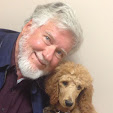
I know this guy named Robbie. He always has a book with him, and when the chorus takes a break, Robbie doesn't leave the chorus seats, he just stays put with his book.
An adult chorus is a complex organism. We get an idea of each other as musicians, primarily. Robbie's a really fine, high baritone. He does meticulous prep, sits in a way that looks totally engaged in the task, and is rock solid reliable. (This has been a banner year for baritones. Ringers to the right of me, ringers to the left of me, ringers in front of me, less than six hundred.) We're the opposite of the Light Brigade. We charge toward success, won't settle for adequate. We're a band o' brothers, we happy few.
It turns out that last night I asked Robbie what he's reading, and he said he's reading young adult books, "fantasy writing" in the vein of the Harry Potter series. It turns out he has written reviews of over 800 of them! It turns out he also has two blogs! It turns out he is not only a voracious reader but a massively productive writer.
Some of my most interesting stories began with a small question so a musician. "What's your day job," I said one time and found a common interest with a future corporate sponsor of the READ from the START program of the Missouri Humanities Council. Like a church, you join a chorus for the aesthetic pleasures, and then you become part of a community of distinct personalities, hopes, breakthroughs, and sadnesses.
Robbie's book reviews are at Muggle Net. His blog is called A Fort Made of Books. I'm going to put links to his writing on my blog. What a discovery!
Wednesday, April 1, 2009


Wednesday, March 4, 2009
First Growth
I photographed first growth this morning with Lola-the-Poodle. The daylily, MING PORCELAIN, looking clean, no burn, is up an inch. DIVA ASSOLUTA, some of it on the edge of the clump, is up two inches. David Hall's oldie, GUSTO, is up 3 or 4 inches. BARBARA MITCHELL and most others are not up at all, saying "Brrrrrr!" I photographed orange-red Witch Hazel this morning, too. I'm thinking about my new daylily show for clubs and know I want to begin with the awakening garden, when crocuses alert us to the renewal that's coming as soon as the daffodils push farther up. Daylily shows are not actually about daylilies, though they may look like it. They are about hope, risk, vision, the journey to clearer sight, the process of learning to keep friends. Daylily shows are about gardeners. Bless gardeners. Curses on thieves and scammers, who are thieves. Flay them first, then curse them.
So, lately, a fog has begun to lift, one I didn't know was there. I know it by its lifting. I am shedding books and vinyl records. This week I'm taking 10 boxes of sheet music and scores to the university where San had the best decade of her career, also a box of CDs for the Vocal Literature class and six boxes of books about music from our joint professorial library. I'm staging surplus file cabinets and small furniture items in the garage for the big day in April when scavengers troll the streets of my neighborhood for the bulky items we place at the curb for pick-up. We're limited to five items per household, but we can be confident about placing many more than that number out on the curb.
Out! Out! Out! San and I were complementary opposites. She could not throw anything away except newspapers and junk mail other than retail catalogues. I am a purger in need of a measure of restraint. Rather than build more and more bookcases, I donate books I no longer need to reassure myself that I exist and that I have good taste. I almost never reread a book, so why do I store read books on wooden shelves? I think they constitute an environment, one of metaphorical mirrors (I have thought from time to time).
Soon purchased daylilies will begin to arrive and it will begin again. I just printed Avery clear labels to put on EON plates for the seedling crop that will go into ground in May.
Last night while waiting for water to boil I leafed through the New Yorker magazine and came across a feature about Natalie Dessay, a soprano sensation I haven't heard about until last night. I finished the article over breakfast and saw where she's taking on the role of Violetta in Verdi's La Traviata at the Santa Fe Opera this summer. Eureka! Kathy's birthday is in July. I got on line and set up a birthday present a week early. We're going to Santa Fe to see La Traviata and to sightsee for a couple of days the week after the Region 11 daylily meeting in Manhattan (not New York, but Kansas). San daydreamed about us retiring to Santa Fe, a dream of a place in her opinion. I didn't want to retire there, because of daylilies. Arid air, water restrictions.
We were married there on Garcia Street in a friend's back yard almost 32 years before San died last June. I lived there from 1972 to 1977 and I'll tell you, it is less of a dream to live there on a salary that's not enough, in a job you know you'll have to leave when it comes time for a tenure review. Sometimes the sense of magic about a place depends pretty much on whether things are going well. They were going well for San and me that summer, when she got up all the courage in the world and said, as we drove downtown a week before returning to Vermont, where I would be her sub while she went to France to study again for a month, "why don't we get married?" Since that happy conclusion to our rekindled romance, Santa Fe has been extra-special to us and to me, and now it is time to plan to bring Kathy into the sense of special places, as she will for me when we go to her family reunion in southern California in August.
So, lately, a fog has begun to lift, one I didn't know was there. I know it by its lifting. I am shedding books and vinyl records. This week I'm taking 10 boxes of sheet music and scores to the university where San had the best decade of her career, also a box of CDs for the Vocal Literature class and six boxes of books about music from our joint professorial library. I'm staging surplus file cabinets and small furniture items in the garage for the big day in April when scavengers troll the streets of my neighborhood for the bulky items we place at the curb for pick-up. We're limited to five items per household, but we can be confident about placing many more than that number out on the curb.
Out! Out! Out! San and I were complementary opposites. She could not throw anything away except newspapers and junk mail other than retail catalogues. I am a purger in need of a measure of restraint. Rather than build more and more bookcases, I donate books I no longer need to reassure myself that I exist and that I have good taste. I almost never reread a book, so why do I store read books on wooden shelves? I think they constitute an environment, one of metaphorical mirrors (I have thought from time to time).
Soon purchased daylilies will begin to arrive and it will begin again. I just printed Avery clear labels to put on EON plates for the seedling crop that will go into ground in May.
Last night while waiting for water to boil I leafed through the New Yorker magazine and came across a feature about Natalie Dessay, a soprano sensation I haven't heard about until last night. I finished the article over breakfast and saw where she's taking on the role of Violetta in Verdi's La Traviata at the Santa Fe Opera this summer. Eureka! Kathy's birthday is in July. I got on line and set up a birthday present a week early. We're going to Santa Fe to see La Traviata and to sightsee for a couple of days the week after the Region 11 daylily meeting in Manhattan (not New York, but Kansas). San daydreamed about us retiring to Santa Fe, a dream of a place in her opinion. I didn't want to retire there, because of daylilies. Arid air, water restrictions.
We were married there on Garcia Street in a friend's back yard almost 32 years before San died last June. I lived there from 1972 to 1977 and I'll tell you, it is less of a dream to live there on a salary that's not enough, in a job you know you'll have to leave when it comes time for a tenure review. Sometimes the sense of magic about a place depends pretty much on whether things are going well. They were going well for San and me that summer, when she got up all the courage in the world and said, as we drove downtown a week before returning to Vermont, where I would be her sub while she went to France to study again for a month, "why don't we get married?" Since that happy conclusion to our rekindled romance, Santa Fe has been extra-special to us and to me, and now it is time to plan to bring Kathy into the sense of special places, as she will for me when we go to her family reunion in southern California in August.
Monday, January 26, 2009
Resolutions for my Imaginary Museum
I imagine that when I retire I will volunteer in a museum and try to make things interesting. I’m motivated in that direction by a little section of the patchwork-quilt-song-lyric, “
Stick with me, baby,
Stick with me anyhow,
Things are gonna start to get interesting
Right about now.
We’ve got to stick with our local museums, anyhow. My imaginary museum wishes there were more volunteers. It wishes that visitors were more in evidence. It wishes things were in better order, that the place looked less cluttered, better lit, cleaner, more interactive, and…there are so many ways to say this…more like the product of a lively mind. There are any number of museums that are already delightful, but it will be just my luck to retire in a place where the museum faces a world of challenge.
So I’m putting myself into the situation of the people I visit, cheer on, and admire and I’m assigning myself an imaginary retirement in their shoes, with only two months to go before the doors open again. Here is a list of resolutions about what to attempt in those two months. There is no chance I can accomplish all of these, but I’ll see what I can do to make a difference.
- I will create an interesting activity at the museum entrance, which I will clear of all distracting clutter so that the visitor’s first impression is that of being welcomed into an “introductory” space that feels “hospitable.”
The activity will involve the visitor and also launch the visit. The
The activity will be germane to the museum’s mission. If the museum is in - I will look at the old photographs in the collection and gather a set of them together in a little display about “how to read a photograph.” I won’t need more than a handful of pictures. I’ll find one that is superb as a grayscale print and use it to teach about the range of tones in a fine print. (I saw one such picture in the museum in Unionville, and it was arranged with other objects so that they all made more sense of each other.) Then I’ll state a few facts about what one sees in the image and pose a question or two.
I’ll find another one that serves a purely documentary purpose.
I’ll find a third one that’s a standard business portrait in color from the 1960s or 70s and compare the portrait style from that era with the earlier era. - I will make a little display called “Hand Made, Tailor Made, and Catalogue” for ways of obtaining clothes. (Hmm. I could add “hand-me-down” and Army to that list.) There’s a doll in the
- I’ll organize one small display area to look like it’s lived in. I saw such an idea at the
- I’ll have an interactive military display where people can polish brass and spit-shine a black shoe, hopefully with experienced instruction. If possible, I’ll have some complete military outfits available for kids to put on and “fall out for inspection,” again with someone experienced.
- I’ll see what I can do with color in the museum. The
- I will subtract objects from the displays one at a time for as long as I can get away with it or until the entire museum looks appealing, whichever comes first. (Never underestimate the value you can add by subtracting something that competes for attention.)
- I will pull various things that are currently displayed with other things just like them into new relationships. I will try to create expectations that displays in my museum stimulate thought.
- I will think of the other volunteers whose friendship is essential to the success of our museum and I will bake cupcakes for them, or go visit them, or take them out to tea, or invite them to go visit and evaluate another interesting museum with me. I will remind myself every day of the off-season that people volunteer for positive social interaction and fulfillment of some kind. I will create positive social interaction with the other volunteers this winter. I will mend fences and build bridges and make friends.
Thursday, January 8, 2009
Detail in Classical Music
I recently bought a stack of complete recordings of Handel operas, going with "Used-Like New" whenever possible to spare expense. The initial motivation was to hear more of the work of one of my favorite conductors, Nicholas McGegan. Another motivation was to hear more of the glorious singing of the late Lorraine Hunt Lieberson. I now own a lot of her recordings! The subject of this short blog is "authenticity" in Nic's work.
This subject of authenticity is something experts and critics love to chew over. There are no recordings of 18th century concerts, of course. There are, however, reproductions of 18th century instruments. There are contemporary accounts of some of the details of musical taste and interpretation. Conductors can make educated guesses about sound from the number of musicians that Handel used, the size of the performing space, etc. All of these ways of knowing are based on forms of evidence that are one step removed from the music on the page and the words beneath the music. It is in the deep thinking about the expressive potential of notated music that I believe Nic McGegan soars!
I have listened to many live and recorded performances by Nic. I've sung in several concerts he conducted and have seen firsthand the way he releases the expressive potential of the details in the scores. The question critics may pose is, "how plausible is it that such attention to detail ever took place in the real-world performing conditions of the 18th century?" Put another way, "Is Nic McGegan over-expressing what is in the score?"
These questions came to mind the first time I worked with him. The details were refreshing in ways I had not heard before. The overall integrity of his conception was compelling. While he is not the only "leader" in the pack of 18th century specialists, he is distinctive in the way he conceptualizes the sound. Other leaders are distinctive, too. That is in the nature of leadership at the top level. I love them also. I would not say flatly that I think he is better than his peers; only that I am more refreshed by his renditions, more thrilled by what I hear in his concerts, than I am by the others.
If you want to hear what I'm talking about, borrow his recording of Rameau's music from Nais and compare it with any other good recording. You'll instantly hear differences in the "thickness" of the sound and in the balance and in the ornamentation and in the phrasing. You don't have to pick a winner; you may actually love contrasting approaches to the same pieces, as I do. But if you compare them, you will begin to hear what is distinctive about Nic's gifts.
I've about finished my first listening to the full recording of Handel's Ariodante. I've got another full recording lined up to go through the same opera, start to finish, with another five-star ensemble. I may have more to say on this subject as I get deeper into these performances.
Monday, January 5, 2009
Anthems For The Stadium
Just sitting and listening to music can bring on thoughts of improving the world. I have wondered recently about updating the moldy oldies that people sing at baseball and football games. I don't mean to replace the National Anthem, of course. That uniquely unsingable anthem stands as the supreme challenge to singers young and old, strong and weak of mind or voice.
Even if you can remember the words, you really can't remember where to breathe. Not that anyone would fault you for breathing before "see" in the first line. Nor will anyone fault you for sounding as if you are being slowly impaled when you sing "free" after an ill-considered breath in "land of the free." That, too, is expected. The singer of the National Anthem is expected to suffer greatly during the task and to emerge alive, though seldom victorious.
Wash away my troubles, wash away my pain
With the rain in Shambala
Wash away my sorrows, wash away my shame
Bad style and bad technique do not mar our love of country. We have heard so many spectacularly bad renditions that we have come to accept them as a part of our Heritage.
So leave the National Anthem alone and let it survive serial attempts and assaults by one and all. I have in mind other opportunities for updating the music at our sports events. I envision the replacement of a moldy oldie like "Take Me Out to the Ball Game" with something really suited to the lungfull of air you can take after five beers, several hot dogs, a plate of melted cheese product with traces of corn chip, and many bags of popcorn or peanuts. What I would much rather hear is a chorus of 40,000 fans singing either of two Three Dog Night hits from the Golden Age of Polyester, "Joy to the World" or "Shambala." Yes, I really mean it. Imagine the joy of thousands of people singing the much easier words and tune of Shambala:
With the rain in Shambala
Wash away my sorrows, wash away my shame
With the rain in Shambala
These are confessional, hopeful, wholesome sentiments made into prayer with the three-part harmony of Ah-ah-oo-oo-oo-oo-oo-oo, Yeah-yeah-yeah-yeah-yeah! After several choruses of that, they'll all be primed for an astroturf-melting shout of "HOW DOES THE LIGHT SHINE in the halls of Shambala?" People will be so happy they will forget that the teams have resumed play. Verily, if the beer hasn't intoxicated you, the singing of that Ah-ah-oo-oo chorus will do the job!
I think the Cardinals organization should take this seriously. I think our government should take this seriously. I am seldom happier when chiming in with a song than I am when I sing this great rock anthem, Shambala.
There are certain songs that every adult should know by heart. Especially in these hard times, we should all know the timeless one by Tom Petty and the Heartbreakers, "Free Falling." That's the tune for the Securities and Exchange Commission, the Federal Reserve, the Stock Exchanges, and the hyper-compensated thieves who have been pushed out of the aircraft with golden parachutes. Rather than have it sung at those times and places, I'd have it sung by the hundred thousand Penn State fans in Happy Valley. They'd sing it in place of "Fight On, State!"
On the Home Page of the investment brokerages, I'd have a singable audio clip of Paul Simon's "Slip Sliding Away." Doesn't that make sense? "You know the nearer your destination, the more you're slip sliding away." These are songs everyone should know. Besides, the Paul Simon "investment anthem" is less troubling than the Beatles' "HELP!!"
Another really good one for those who are embattled and resisting impeachment is also a Tom Petty tune. "I won't back down" is the name of it. Tom sings, "you can stand me up at the gates of Hell and I won't back down." Then comes the big refrain that 40,000 fans should chime in with..."HEY, BABY! THERE AIN'T NO EASY WAY OUT. HEY, YEA! And I'll stand...my...ground. And I won't...back...down."
These songs should be required learning by one and all because they represent the vanishing legacy of My Generation. My 15-year-old granddaughter, who wants to play electric guitar, does not recognize the name "Tom Petty" and can't sing or play any riff or phrase from "Free Falling." You can say all you want about a generation that doesn't realize that Muhammad Ali was an American boxer, doesn't recognize the phrase, "it depends on what "is" is," thinks the American Revolution was a rock band, and is bewildered by telephones with dialing mechanisms. All these things can be remedied or punished. But you can't replace a timeless cultural legacy that is embedded in these singable evocations of History.
Ah, Paul Simon, how you grind up syllables! My personal theme song is one of his. I'll sing the refrain in Paul's pronunciation: "But I would not be cawn-vic-ted by a jury of my peers; still crazy after all these years."
Tuesday, December 23, 2008
Joy in Grieving
Yesterday was the 6-month anniversary of San's last breath, five hours after my children and I blessed her and bid her leave to go as she slept away the last of her life of almost 68 years. I did not think of her as "old" in any way. Until her liver failed in the last couple of weeks, San never looked her age except in infancy. The people who knew her thought I'd made a typo on her memorial service when I gave her birth year as 1940. Her students may have thought of her as a mother figure. To think of her as a grandmother was a real stretch. I thought of her as my girl. We were youthful with each other and for each other even as we neared the dimming of our days together.
I have done no research into grief. I can't tell you about stages of it unless I notice I have moved from one form of it into another form. I don't want to know the template. I only want to know experience as I live it and look back on it, this experience, anyway. In the history of the world, San was just a speck, as I am. In the history of 2008 in the U.S., San was just one of 40,000 women who perished from breast cancer. Yet, to say that is to reduce the dignity of human life to a statistic, and I am sorry for even putting a number into this memorial of grieving. Every one of the 40,000 was one. We do not live as a statistic, we live as a unity, a point of focus of the grand energy that spins life, weather, worlds, galaxies, epochs, sinners, and saints.
The one is the one I bless here. San was one and now she is one with the One. I have only indirect knowledge of the One. I sense that I am its instrument, but I can't tell you more than that. The One is the source and also the final home of all the little ones.
So, rather than tell you all that I have done since my grieving began in July, I will tell you a thing that came to me from that source that feeds my imagination with metaphors. A friend approached me at a conference in early November to ask sincerely how I'm doing. I gave a sincere answer. The words are somewhat different each time I give that answer. That's OK; there is more truth than one telling ever can express. Just as you can't talk about The Border War era in Kansas and Missouri in one voice, you can't talk about the loss of a spouse in one telling. I said what my friend hoped to hear, that San had suffered no agony at the end, that the vigil at her side that last day was much like watching the tide go out.
Little did I know what I'd released with that metaphor. Ten minutes later, while listening to an angel, who appeared in the person of the poet Naomi Shahib Nye, give one of the best talks I've ever heard, I realized that I had just received a poem. It came in one piece admitting of no editing, and it stands as my report on the life that passes and the life that continues.
When I woke and sensed
the tide of her life
had gone out,
I knew I was not
the dry beach
but the ocean.
Monday, November 24, 2008
Style and Story in a Christmas Narrative

I wrote a piece last year, “Suggestive Pacing,” about the way the style of telling a story seemed to fit the story. Cormack McCarthy’s The Road was the object of my attention. I had never read any other examples of McCarthy’s work, so I formed the mistaken impression that the style of storytelling in that book was a unique stroke of genius. Later, when I read four other books by him, I understood that McCormack told all the stories in that style. It was accidental that the style seemed so apt to the story of The Road.
Now I’m engaged in another process of sorting through style and story, this time in a wonderful and challenging piece of music for Christmas titled El Niño. It’s an oratorio by America’s foremost composer, John Adams, who may be best-known for his “minimalist” opera, Nixon in China. The libretto is constructed of disparate sources, Biblical and otherwise. The emphasis of the work is a feminine perspective on the sacramental nature of conception and birth. To carry this theme through the work, Adams has chosen a group of poems by women who wrote in Spanish.
The overall effect is magical, but there is a stylistic challenge for the listener in the opening movement. That challenge is what prompted me to consider style and story again. As I thought of “barriers to understanding” in that opening section, I had to consider the challenge the composer took on as well. John Adams wanted to say something about the great mystery and divinity of all births by connecting the Christmas narrative with the present day.
I didn’t think of “barriers to understanding” until I played the opening of El Niño for my colleague, Patricia Zahn, during a drive to Hannibal a couple of weeks ago. A trip to Mark Twain’s town and the site of great stories…what better occasion to tell Patricia about Adams’ treatment of the Christmas story? Imagine us in the car now.
I tell Patricia about the minimalist technique of deconstructing a text, breaking it down to syllables, individual words, short phrases, and strewing these pieces of language as tossed confetti, or nuclear fireflies, or a swift immersion in madness. I tell her of the effect of a tsunami of sound at the moments of God’s presence in the story. Then I offer to play her the opening movement on the car stereo. She is eager to hear it.
And when she does, she is perplexed. I allow the recording to continue from the disorienting beginning to the strange quietude and clarity of the sung narration that follows the first big section. I sense her unease, then, and turn it off. The first word that comes to her mind is “annoyance.” She thanks me for preparing her for the experience. I imagine if I had not, she would have begun to look for a way to leave the car without injury!
Her reaction made me wonder why Adams would begin such an important story by subjecting the listener to an experience of incomprehension. There is a beautiful poem there; why would he deny the listener a chance at hearing how the words add up to a poem? Even after many hearings of this opening section, the most attentive listener will have no way of knowing the text. Then I realized that in performance, the listener has a printed text, either in the program or in projected supertitles. I thought of this printed text as a sort of “scripture.” The listener is placed into a relationship with a “scripture.” This is where style and story come into a relationship probably unintended by the composer.
“Why did you do this?” says Joseph to Mary later in the oratorio. It is a good way to approach the opening movement that so disorients and mystifies. I don’t know why John Adams “did this,” and it would be folly to think that I could read his mind. It is not folly, though, to observe what he “did” and then to think about how his choices are helpful, even miraculous, in making this well-known story fresh.
Here is what happens at the beginning. Instantly, simultaneously, I hear reminders of musical ideas from a long tradition of classical music. I think of obstinate rhythms in Stravinsky’s Rite of Spring, the Latin American polyrhythms and the harpsichord of the Missa Criolla of Ariel Ramirez, the jiggling violins and cellos from one of Bach’s Brandenburgs (which one???), the twinkling down of baubles of bright tones as if overlaying this hubbub, but in exotic scales; the gruff, irregular, huffing pronouncements from low brass, like the weight of received wisdom from a gang of old farts, or of encrusted church doctrines taken for granted; all of this with unflagging energy and momentum.
The experience is “layered” and evocative of Charles Ives, who imagined the effect of hearing several bands in a town parade, one near, the other blocks away. Mozart had imagined this too, in the 18th century, in the ball scene from Don Giovanni. There are three small orchestras at the Don’s ball, each in a different room, playing for a different class of people, each playing in a different meter, and we hear them all at once.
So this is the soup we’re in while El Niño engulfs us in sound and rhythm. Out of this energetic texture comes the sound of female voices repeating the single syllable, “mai,” which we know is not “May,” the month, because we are predisposed to depend on “scripture,” the program in our hands or the supertitles above the performers. They sing, “mai-mai-mai-mai-ma-mai- mai-mai…Mai-den!” as if acquiring the capacity for language. Then out of the hubbub comes the male exposition of the word, “King – King – King – King;” then, smoothly, “King of all kings – king of all kings – king of all kings” and other fragments of a beautiful poem given out in atoms of language. “So – still; so – still; so – still.” “He’s like the dew; he’s like the dew; he’s like the dew.” “Maiden and mother and maiden and mother and maiden; mother and maiden; mother and maiden.” Atoms, atoms! Atoms everywhere in this dense throb of human activity, as if the whole world is engaged in the cacophony of whatever this poem is.
The opening might seem pure chaos if not for the sense that it moves forward on the back of Jonah’s great whale, or on the great plates of the earth’s crust, which I think of when I hear the basses and cellos of the orchestra move from the one note they’ve sustained to its adjoining neighbor up or down.
This sense of “harmony” is in no way ordinary, yet it is sensed as a product of intelligent design; an extremely disorienting, counter-orienting experience is managed through intelligent design. I find this fascinating.
What kind of story begins with an incomprehensible experience? What kind of story posits a supernatural event in the context of an intelligent design? What kind of story requires an act of tolerance for disorientation and an act of enduring faith? What kind of story frightens the participant?
I give you the story of Mary, unwed teen mother, and her incredulous, humiliated, enraged, disappointed fiancée, Joseph, trying to judge their proper course of action in unbelievable conditions, and we listeners are a part of that story if we can resist the impulse to escape it, and what it may imply about what is important.
(The St. Louis Symphony Orchestra and Chorus will perform El Niño on December 13th and 14th, 2008.)
Subscribe to:
Posts (Atom)

 Posts
Posts